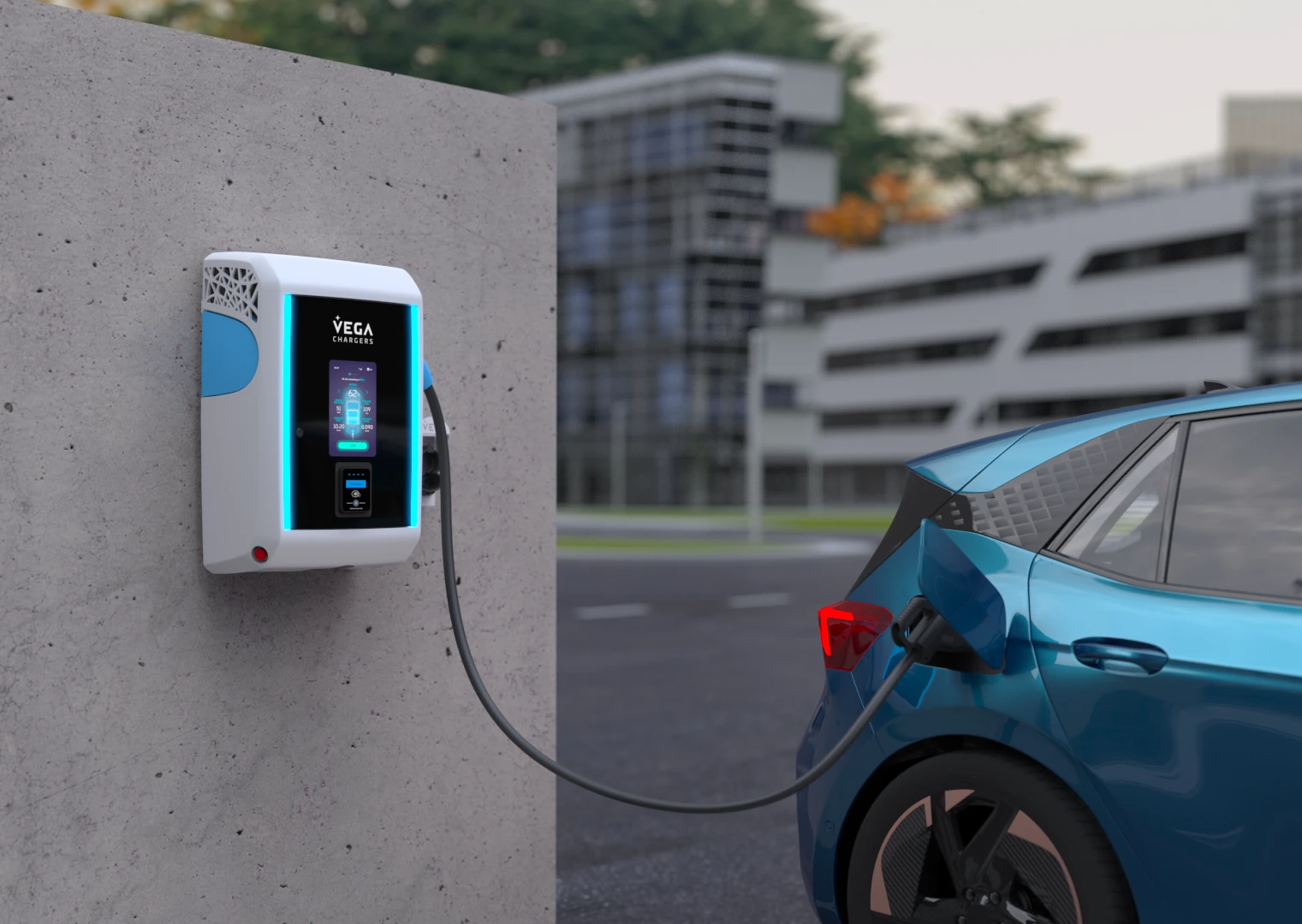
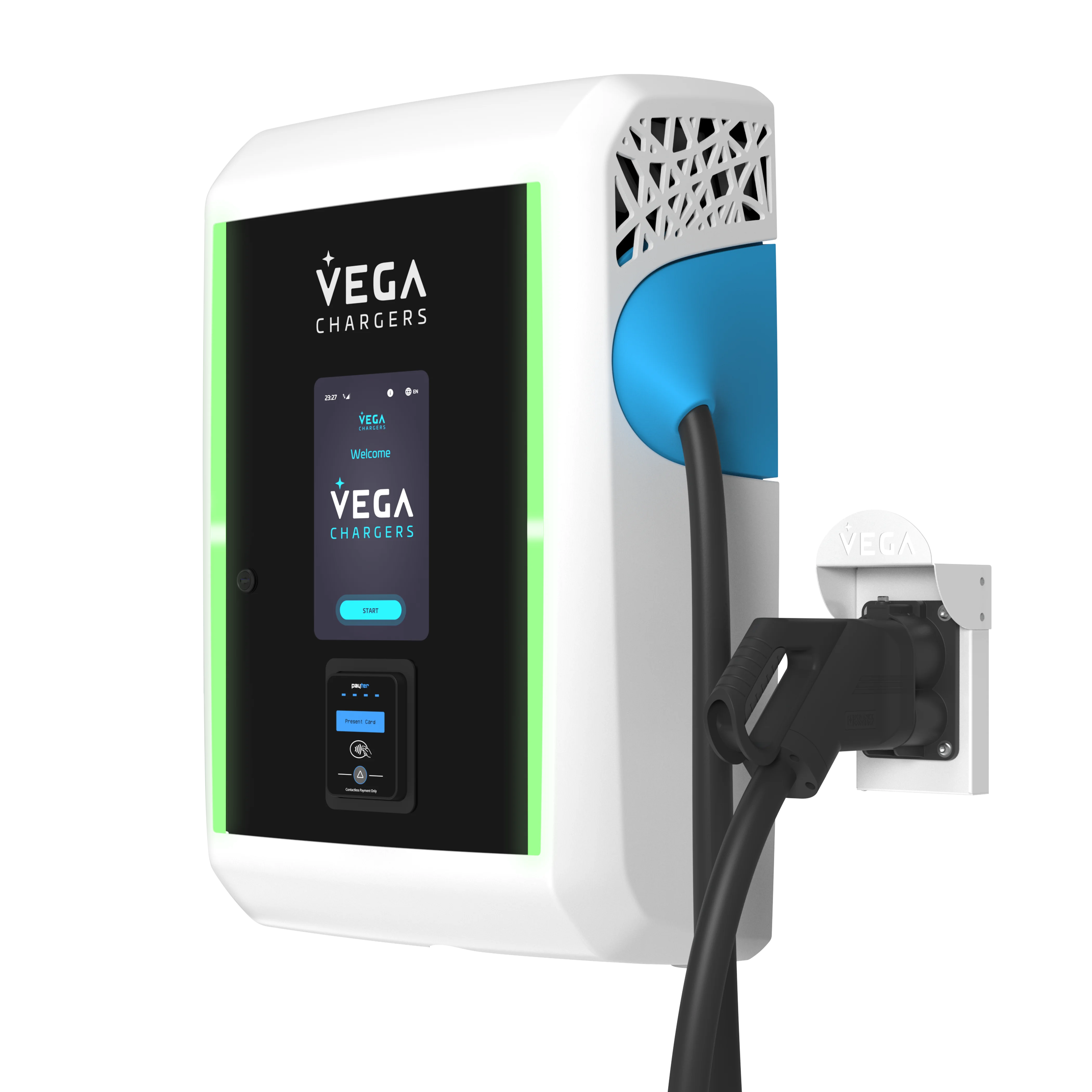
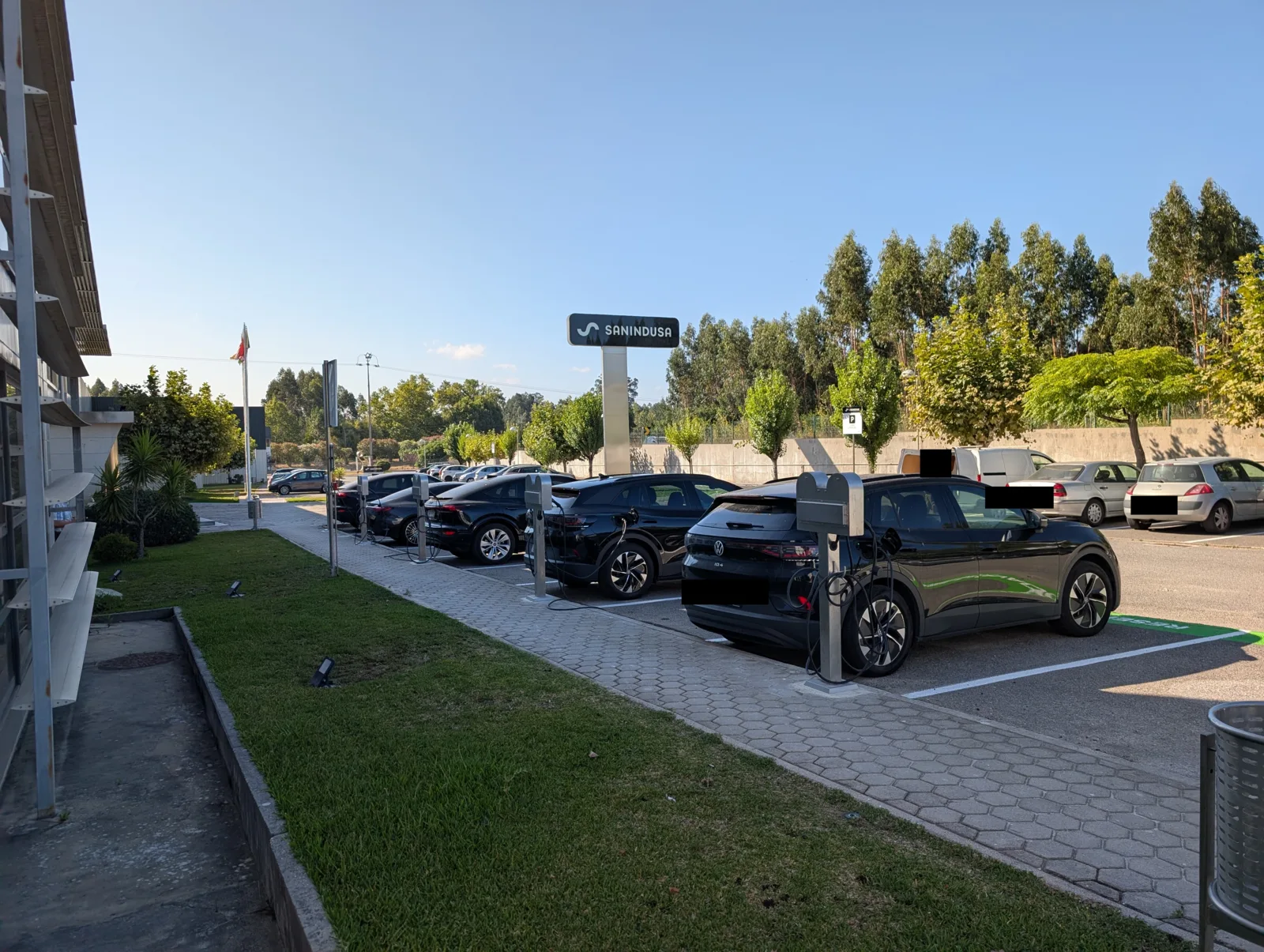
Turnkey design, licensing and installation. Fast DC 40 kW for operational fleets; standard AC 11 kW for staff parking. Alvará IMPIC nº 119756.
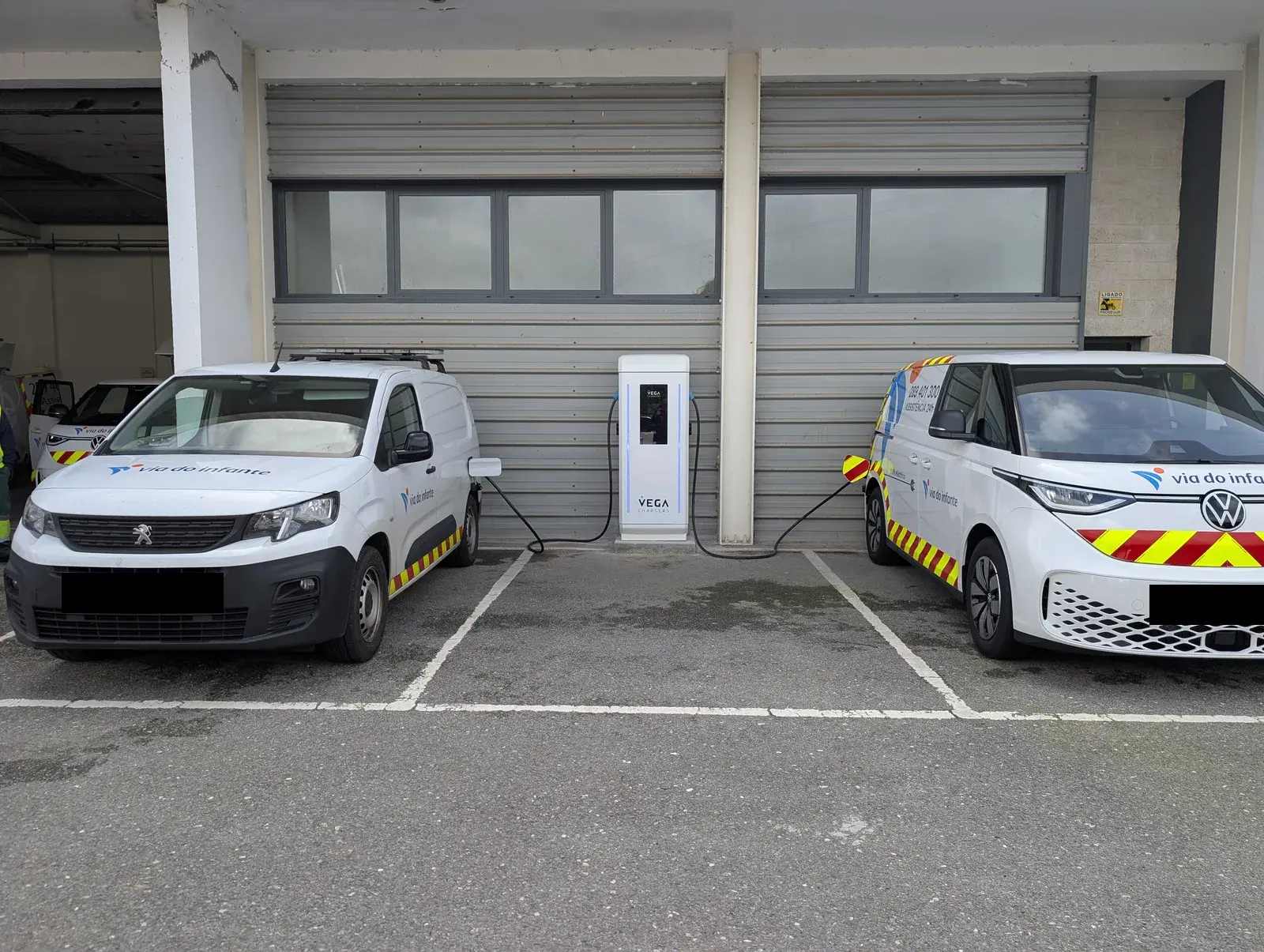
We've already electrified Sanindusa (35 AC chargers) and AAVI, concessionaire of the A22 (80 kW DC for fleet operations).
From running a fleet that needs fast charging to a corporate car park with dozens of AC points, we've done both.
Concessionaire of the A22 with an operational electric fleet. We deployed an 80 kW Vega ALOHA Lander DC charger on private land, with no public charging-point operator (CPO) or MOBI.E network, full turnkey electrical works and SOLX Park for remote management.
Portuguese sanitary-ware manufacturer. We installed 35 Urban Connect 22 kW AC chargers across multiple industrial sites, with dynamic load balancing that avoided any contracted-power upgrade and full SOLX Park management.
Standard AC up to 22 kW runs on a standard low-voltage contract (BTN, Baixa Tensão Normal) and usually doesn't require a power upgrade. The 40 kW DC option is also BTN-compatible, possibly with a tier bump on contracted power. DC up to 160 kW requires either a special low-voltage contract (BTE, Baixa Tensão Especial, above 41.4 kVA) or a medium-voltage contract (MT, Média Tensão), sometimes with a dedicated transformer. In the feasibility study we verify your current contract and define what needs to change.
Yes, and it's common. A typical example is a workshop or company with a mixed fleet: standard AC in the employee car park, 40 kW DC for the delivery fleet and ultra-fast DC for urgent vehicles or customer cars in service. Everything is managed on the same platform with dynamic balancing of the available power.
On DC the limit is the equipment, not the car. Most modern EVs accept at least 50 to 100 kW on DC and recent models exceed 150 kW. On AC, by contrast, the car's onboard charger is what caps the speed, often at 7.4 or 11 kW.
For an AC or 40 kW DC install with low-voltage supply already in place, work takes 2 to 5 business days, including electrical design, panel connection, base, equipment mounting and commissioning. Ultra-fast DC projects that require a special low-voltage (BTE) or medium-voltage (MT) contract and transformer work usually take longer; the timeline is defined in the feasibility study.
Yes. Every solution we deploy has an RFID reader (card-based authentication) and a MID-certified meter (Measuring Instruments Directive, fiscal-grade metering), supports custom tariffs and produces reports for accounting. It runs as a private network or integrates for automated billing. For third-party billing we help configure the pricing model (session, kWh, hour) and the right payment integration.